Advancements in Metal Roof and Wall Panels

The evolution of metal roof and wall panels in the steel building industry.
ABC Blog | Advancements in Metal Roof and Wall Panels

Metal roof and wall panels are commonly used in today’s building industry and are highly valued for their versatility, durability and aesthetic features. This wasn’t always the case, though. Over the last several decades, the metal building industry has evolved and the use of metal panels and coordinated metal building components is now a major boon for builders as it helps them provide on-time, on-budget, attractive project to a wide-ranging customer base.

To meet changing demands and standards, the industry has continued to develop and progress since the Industrial Revolution. This era saw more than just an increase in the use of iron as a construction material. In the late 1880s, metal became a profitable option well-suited for steel-framed buildings, skyscrapers and train stations. During WWII and in the decades that followed, modern steel became the universal standard. Common uses included military shelters, oil storage, churches and private buildings—including landmarks like the Empire State Building.

 1940s – 1950s:

During the 1940s and 1950s, industry sales centered around standardized buildings (pre-engineered)—mostly to the agricultural, industrial and government markets. Typically unpainted and unattractive, these metal roof and wall panels simply met their functional purpose. However, their ability to be ordered, delivered and installed quickly and easily made them very valuable.

1960s:

The innovation of pre-painted wall panels in 1959 transformed the metal building industry. Formerly focused on agricultural and industrial end-uses, the additional color options made metal panels more appealing to commercial markets. In the late 1960s, the innovative standing-seam metal roof panel delivered advantages previously unheard of. As seen with American Building Components’ LokSeam® panel, this design features fewer seams that are raised above the panel. With fasteners situated above the panel level, the risk of damage from moisture that can collect there is reduced. Standing seam metal roofs are also designed to allow for expansion and contraction that naturally occurs as a result of changing temperatures. This provided owners, designers and contractors with a high-quality roof that can be specified and used for large buildings. Their low upfront cost and superior performance and lifespan made metal buildings the preferred solution for low-rise, non-residential buildings.

1970s – 1980s:

In the 1970s, the metal panel industry primarily focused on commercial, industrial and agricultural buildings of 10,000 sq.ft. or smaller. In the 1980s, the industry continued to grow in response to customer and market needs. New coating technologies were introduced to provide better corrosion resistance, making metal buildings a more viable long-term option. Technological advances in wind loading for walls and wind uplift for roofs also addressed structural engineering concerns previously held.

1990s:

In the 1990s, metal building construction nearly doubled because metal had proven to be flexible, cost-efficient and time-saving. As a result. the industry expanded to include retail buildings and civil/service facilities, such as schools and hospitals. Emerging metal panel technology, such as snow load solutions, was beginning to be investigated and addressed. In particular, the advancement of computer technology helped create more robust design systems. This enabled manufacturers and contractors to quickly price and deliver detailed preliminary design drawings with greater efficiency and accuracy.

Early 2000s:

The first two decades of this century brought more diverse product and service offerings to the market. These included practical and aesthetic innovations like insulated metal panels (IMPs) as well as new roofing finishes. This decade also saw a new focus on metal building safety in response to dangerous California earthquakes. To help mitigate the risks, research into the structural implications of seismic activity was conducted, resulting in updated building standards. Customer requirements also drove energy performance optimization and engineering guidelines for tapered structural components, and new exterior finishes and styles for metal roof and wall panels were introduced. This included the use of horizontal instead of vertical siding systems and smooth-surface panel faces.

Today…and Beyond:

The dramatic and innovative industry advancements of the past have given way to the full and complete metal panel solutions for a wide range of building types—including unconventional ones like custom residences—that we enjoy today. Continued research, partnerships and collaboration are further driving industry expansion and diversification—a trend that shows no sign of slowing.

For more information on American Building Components’ metal roof and wall panels, trim and components, visit us online. Metal Product Distributors: quote and order metal building products anytime, anywhere and from any device using our online ordering tool. If you don’t already have an account, register for access today!

DISTRIBUTORS: Shop online at shop.abcmetalroofing.com!


Using Personal Protective Equipment (PPE) to Safely Install Metal Roofs

Anyone who has installed a metal roof knows it can be a dangerous business. With risks ranging from slips and falls to debris and even skin damage as a result of sun exposure, the installer needs to be cognizant of all safety considerations to mitigate personal injury. The good news is that wearing the proper Personal Protective Equipment (PPE) can greatly reduce the risk—and severity—of potential injuries.

Here we’ll review gear that can help ensure personal safety on jobsites and recommend equipment to always have on hand.

Standard Construction Safety Equipment


Safety Gear Recommendations:

Gloves—the thicker the better for optimal protection from cutting one’s hand on the sharp edges and corners of sheet metal. According to the Metal Construction Association’s (MCA’s) Metal Roof Installation Manual, clean leather gloves that allow for a good grip are the the best injury protection. (Dirty gloves can soil and scratch the panel surface.) Gloves also protect hands from burns when handling materials heated by sun exposure.

Hard Hats—according to OSHA, when exposed to the possibility of head injuries, hard hats should be worn. Roof work, especially handling metal materials, does raise the possibility. It is critical to ensure the hard hat fits properly to maximize their protective effectiveness.

Eye Wear—ensure protective eyewear features side shields to prevent metal shavings or any other airborne debris from damaging the eyes.

Fall Protection—slips and falls are, perhaps, the most obvious risk when installing metal roofs. Recommended gear includes a tie-off safety harness, non-skid footwear and mesh netted “Fall-Saver” insulation laid underneath the roof to help prevent falling through.

Toe Protection—in addition to being durable and having non-slip soles, steel-toed boots can help protect installers’ toes from injury.

Forearm Guards—Even lightly brushing against an exposed metal panel edge can result in serious injury. Forearm guards made of chainmail or Kevlar are recommended to prevent wounds.

Reflective Vests—these are a key piece of safety wear critical for alerting others to a workers’ presence. This is particularly important if there are vehicles or mobile machinery on site.

Proper Clothing—perhaps the most obvious recommendation is to wear fitted clothing. Loose clothing can get caught on sharp material and in machinery, which can cause serious, irreversible injury. Long-sleeved shirts and pants should be worn to protect skin from metal shavings and sun damage.


General Construction Site Safety:

In addition to the specific PPE listed above, the saying “Better safe than sorry.” can’t be overstated. The following is a checklist of common-sense equipment and other items that should always be on every construction site:

  • First-Aid Kit
  • CPR/AED kits
  • Fire extinguisher
  • Working access to /communication with Emergency services
  • ICE (In Case of Emergency) contact information for all personnel
  • Water
Additional Resources:

To learn more about PPE and safeguarding against injury when installing metals roofs, OSHA construction site safety guidelines and Metal Construction Association’s Metal Roof Installation Manual (Chapter 9: Safety Issues) are great resources. You can also learn more about metal panel installation considerations from our recent blog post. And, of course, the American Building Components team is always available to answer questions and provide guidance.


When to Call a Metal Panel Manufacturer: Part II

In Part 1 of this series, the success of a metal roof or wall project can rest heavily on the installer’s ability to recognize issues. When that happens, calling the manufacturer is not just suggested, but imperative to ensure any potential problem is averted before it’s too late. In addition to issues like damage to the physical panel or problems with the fasteners discussed previously, let’s take a closer look at a few other common circumstances under which ABC recommends reaching out to the manufacturer:

Alignment and Substrate Issues

The installer is responsible for verifying the condition of the substrate and checking for proper alignment before attaching any sheeting materials. If the installer notices any issues like this (either before installation or once they begin laying panels), they should stop and address them immediately. This might include oil canning or other irregularities in panel appearance. The installer should investigate the source, and—if unable to identify and properly remedy the situation on their own—they should call to the manufacturer’s support team. They may be able to suggest ways to identify source of the problem—whether it be installation or manufacturing—and from there, make suggestions on how to best address the situation.


Accessories

Adding penetrative accessories such as snow guards or mechanical curbs to a roof or installing doors, windows or louvers to walls can impact the system, its weather-tightness and appearance. Oftentimes, accessory installers with little or no knowledge of metal sheeting systems come onto the job to perform accessory installation. In these cases, it’s wise to visit with manufacturer prior to installation of these accessories and to alert the non-metal panel installer of precautions the manufacturer suggests be taken.

The image at left represent several installation issues that could have been avoided by calling the metal manufacturer prior to installation. The piping used is not compatible with metal roofing and was not installed in such a way to prevent issues with roof performance, including leaking and water damage.

Manufacturer recommendations can vary based on the panel type and building slope, as well as on the accessory and fastener type, and installation location.

Another factor to consider when adding accessories to your metal building is that some material types can react negatively with the installed metal system and lead to damage as well as void manufacturers warranties. Since accessories can be make of many different types of material, any potential accessories should always be researched prior to installation to ensure the material type is compatible with your metal roof and/or wall system.


Panel Engagement

Panel systems are designed and engineered to attach and engage one another to ensure optimal performance. These specification are outlined in the manufacturer’s installation manuals and project drawings. If at any point the panel does not engage as depicted in the details, installation should be halted and reviewed to determine the cause. This can require a call to the manufacturer to help determine if the matter is site- and/or substrate-related or if it’s a manufacturing issue requiring replacement material.

Panel engagement issues that warrant ceasing installation and making a call to the manufacturer include:

  • laps are not nesting properly
  • clips are not engaging as they should
  • panel modularity can’t be controlled
  • panels aren’t “resting” on the substrate—causing excessive bowing and stress

Once the material is completely installed, it is much more difficult to determine the cause of a problem and is potentially more expensive to remedy. Additionally, in many cases, full installation constitutes acceptance of the product and the manufacturer’s hands could be tied or extremely limited in being able to assist in remedying after the fact.

By knowing when to be proactive with a call to the manufacturer, installers can mitigate many types of potential pitfalls. And if you’re just not sure, it’s best to call.

For more information on metal roof and wall products, visit us online or reach out to your local representative today!

When to Call a Metal Panel Manufacturer: Part 1

Each metal building installation is unique and even the most experienced of installers can run into trouble on a job. Whether a panel isn’t engaging properly, it’s not meeting stated tolerances or fasteners are missing or not working, anyone who takes on the task of installing metal panels needs to know when to call a metal panel manufacturer for support, guidance and resources at any time to ensure the success of their project.

ABC Blog: When to Call a Metal Panel Manufacturer

Manufacturer Resources:

While it’s not the manufacturer’s responsibility to guarantee their panels are installed correctly, reputable manufacturers should set installers up for success. They can do this by providing product resources and recommendations on how to alleviate or mitigate potential pitfalls, and by sharing tips on how to avoid common mistakes that other installers have made.

  • Product Installation Manuals and Construction Drawings: Before installation begins, the product installation manual and detailed construction drawings should be reviewed by the installer—especially if this is his or her first time working with the product. These resources contain all the product information needed as well as installation best practices. American Building Components makes product details and installation information available to metal panel dealers and distributors through shop.abcmetalroofing.com. If you’re a dealer or distributor, click here to learn more and sign up for an account!

Installation techniques can vary based on the unique dimensions of the panel as well as on the actual building design. When an issue arises that is beyond an installer’s expertise, it’s in the best interest of everyone involved to call a metal panel manufacturer for input before permanent mistakes are made.

When to Call a Metal Panel Manufacturer

Examples of when American Building Components recommends that an installer immediately call a metal panel manufacturer are:

  • Product Damage: Building owners may not always be able to recognize material damage and understand how it can be detrimental. Therefore, installers should always evaluate all building materials before any installation begins. If—after review—damage is suspected, the building owner should take pictures of the damage and notify the manufacturer immediately. The manufacturer will advise if the issue is minor and installation can begin, or if the panels should not be installed. The last thing you want to do is install damaged panels and have to uninstall them and wait for new materials. The impact of removing and replacing panels like this will significantly increase cost and delay the construction schedule.
  • Fastener Issues: The type of fastener used depends on the material they will be fastening to (substrate). If the substrate differs from what’s stated in the project details, check with the manufacturer to verify that the provided fasteners can be used. If the screws aren’t engaging properly, or there any problems with the fastener type. The manufacturer can advise how to move forward based on the project details. In short, substituting fasteners with ones not supplied by the manufacturer is never recommended.

Remember: no problem is too small to call a metal panel manufacturer for advice! In part two of this series, we’ll share more situations when calling the manufacturer will save time, money and headache. For more information on metal roof and wall products, visit us online or reach out to your local representative today!

Proper Ventilation for Metal Roofs and Walls

Selecting metal roof and wall panels is a strategic investment for the life of a building. To protect their investment, it is key that your customers ensure the proper ventilation system is installed. Optimal air movement not only promotes temperature regulation and energy efficiency but also reduces the risk of moisture-related issues like condensation build-up. Here, we look at some of the main ventilation considerations and resources your customers need to ensure success.

ABC Blog: Proper Ventilation of Metal Roofs and Walls

Why is proper ventilation important?

Proper ventilation helps optimize the performance and efficiency of metal buildings by:

  1. Controlling condensation

Condensation can wreak havoc on metal, causing corrosion, reduced thermal performance of insulation, mold and mildew growth, and even insect infestations. For example, in warm and humid areas, outside air that enters a building without moving through a ventilation system can bring with it large amounts of humidity. This humid air can create an uncomfortable environment, accelerate panel weathering and increase the possibility of mold growth. This issue is worsened when the outside temperature falls below the inside temperature, creating a perfect breeding ground for condensation development.

  1. Regulating temperature

Regulating and maintaining ideal interior temperature can help cool the building in warmer months, keeping the structure comfortable to occupy. Temperature regulation also helps protect the integrity of the building from excess (and premature) metal panel expansion and contraction. This movement can weaken the integrity of fasteners, which are designed to keep panels from detaching/pulling away from the substrate.

  1. Preserving air quality inside the building

Proper ventilation helps remove volatile organic compounds and other air pollutants that are detrimental to human health and productivity. The Environmental Protection Agency (EPA) and the Occupational Safety and Health Administration (OSHA) have published guidance on indoor air quality standards in commercial/institutional buildings. These standards help determine ventilation needs that need to be met to ensure compliance.

Who Needs Ventilation?

As expected, most structures require proper ventilation in accordance with their geographic location, contents and/or building end-use. Structures housing chemicals or moist substances require more ventilation than those storing dry goods in relatively arid environments. Ventilating a building that stores ceramic in the desert is very different than ventilating an indoor sauna in practically any geographic location. Agricultural facilities in particular must employ proper ventilation to mitigate the dangers posed by ammonia and other corrosive airborne fumes. (See our Animal Housing blog post for more.)

How to Ensure Proper Ventilation:

Similarly, the ideal amount and type of ventilation your customers need depends on their building’s unique specifications and end use. Generally, structures larger than 2,400 sq. ft. may require more than one type of ventilator to allow air to move between them (cross-ventilation). Structures that house people, animals and/or valuable material also benefit from cross-ventilation using ridge vents near the roof and a louver vent located closer to the structure’s floor. In these cases, it is recommended that your customers work with design professionals and building engineers who can help determine the building ventilation requirements. These professionals can recommend the appropriate, high-quality metal panels and components that suit the unique requirements of their project.

So, what ventilation options are available for your customers? Ventilation solutions fall into two main categories: natural (unpowered) and mechanical (electrically assisted):

  • Natural ventilation methods include installing a ridge and eave vents that enable air to circulate naturally through the building. Your customers can also use vents that capitalize on the natural vacuum created when air moves quickly over angled surfaces like roofs. The lower pressure in this vacuum draws air out of the building—most often through ridge vents. This choice will depend on your customer’s aesthetic preferences and/or installation location limitations.


  • Mechanical or power-assisted ventilation helps draw more cubic feet of air into and out of the space per minute. Powered fans with curved blades and/or louvers are often used to achieve greater air flow. As previously noted, air flow is vital in preventing condensation, so this is particularly helpful in naturally humid environments.

Conclusion

In conclusion, proper ventilation is a critical component of any high-quality building. As metal panels are becoming more popular, understanding how to achieve an effective ventilation system can help ensure the success of your customers’ building projects.

For more on ABC’s ventilation solutions, visit our previous blog on condensation management, check out our ventilation-enabling components or reach out to your local representative today!

Metal Roof Pitch Part I: Engineering and Strength Considerations

Whether you’re an owner who needs to consider roofing material options because of the nature or design of your building, or a distributor/contractor whose job it is to recognize whether a suggested design will or won’t work based on a range of circumstances, it is critical to understand the engineering behind why roof pitch and tensile strength are important on a metal building project. In part one of our series, we look at the engineering and strength considerations that need to be taken into account when designing or specifying a building, while part two will review the best type of metal panel to use based on the pitch and end-use of your building,

Engineering Considerations:

Ideally, your roof pitch will be the “sweet spot” between having a roof pitch that’s so shallow that the beared load is increased and having a roof pitch that’s so steep that wind uplift probability is increased—a factor which can also vary based on the building width. Specific engineering considerations with regard to roof slope include:

  • Snow Load Requirements: lower slopes create more load that the roof/structure must support. For example, when you have a flat roof and it snows, the snow will stay on the roof, adding more weight; on a sloped roof, a good amount of the snow will slide off of the roof, so the load will remain in an acceptable range the structure can support.
  • Wind Load: Preventing roof damage from high winds is largely dependent on roof geometry, slope and building material used. If outside air is allowed to penetrate a structure through cracks and other openings when wind flows over a building, the air pressure beneath the roof assembly increases. When this pressure becomes greater than the pressure directly above the roof (which happens as wind flows over a building), this can cause upward force on the roof system, leading to loss of structural integrity and significant damage. Wind uplift rating and minimum slope requirements are dictated by building codes in the market, so be sure to check with your local municipality for specific details.
  • Water Diversion: the steeper the pitch the faster it will channel and divert water, preventing it from pooling and causing other issue like mold, mildew and paint degradation. As with the snow load considerations mentioned above, the less additional weight burdening the roofing system, the better.
  • Minimizing Debris: steeper-sloped roofs also help minimize the chance that debris, mold and mildew have to build up on the roofing system. Unless there is a catastrophic weather event that drops large amounts of heavy debris—tree branches for example—there is a small chance that debris on a roof of any slope will exceed its ability to carry the load. However, because the more debris is able to slide down and off of a metal roof, the less that needs to be manually cleaned. Additionally, access to and cleaning the eaves of sloped roofs is much easier and less time-consuming that trying to perform the same maintenance on a roof with less slope.

The Strength of Metal Panels:

  • Tensile strength: This refers to the panel’s ability to resist breaking when it’s placed under pressure or tension—meaning the panel has a measured ability to bend under a certain amount of stress before it snaps. Galvanized steel panels can withstand between 50,000 and 80,000 pounds of pressure per square inch (50 KSI – 80 KSI)—significantly higher than the tensile strength of other roofing materials. Despite this, metal panels remain lighter and more impact resistant, keeping the likelihood and cost of repairs to a minimum. Check the tensile strength of your metal panels with the manufacturer and be sure to reference common testing standards related to roof slope, including ISO ratings and ASTM standards that test tensile strength.
  • Steel Hardness and Density: While it can generally be assumed that thicker-gauge panels are stronger, the type of building construction, location and end-use can affect the choice in panel thickness. Buildings such as pole barns, post-frame buildings, warehouses and garages can require roof panels to span longer distances and therefore require thicker panels as they are more structurally sound. These thicker panels will also aid in reducing the chance of collapse under the weight of snow and water—particularly when the roof pitch is low. For smaller buildings—like residences—with supporting trusses and purlins that are typically closer together, thinner panels can be used in conjunction with thicker trim for an economic, structurally ideal residential metal roofing system. See our blog on metal panel gauges for more.

Conclusion:

Following common standards, doing adequate research and conforming to manufacturer guidelines regarding slope will ensure you’re reaping the full benefit of your metal roof panel selection. For more information on metal roofs and to learn more about recommendations on roof slope, contact your local ABC representative today.

Additional Resources:

For more information on slope requirements, visit NRCA’s website. For more information on steep-slope metal roofs and their benefits, visit the Metal Construction Association’s website.

It’s the Little Things: How to Measure Metal Panels with a Micrometer

As installers and distributors know all too well, the tiniest differential when measuring metal panels for installation can mean success or failure. Close just isn’t good enough. That’s where a micrometer—a precision tool used for measurement accuracy—comes in. But how can you be sure the panels purchased for a project don’t exactly live up to their stated specifications or fit within a gray area that may seem minimal, but ends up causing problems when actually applied to a structure?

In a previous blog post, we discussed the importance of knowing the thickness (gauge) of your metal panels to ensure you know how to choose the correct thickness of the metal panels you choose to use on a project. This is important because you can easily find panels from different manufacturers that—while labeled with the same gauge measurement—can actually vary greatly in the actual thickness of the metal sheeting, creating a noticeable difference in panel stiffness and strength. Since the labels on the panels don’t tell the entire story, using a micrometer to measure the exact thickness of the panels is a sure-fire way to know what you’re paying for.

What is a Micrometer?

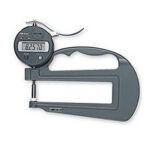
From the Greek, the word micrometer’s literal meaning comes from micros (small) and metron (measure). The tool, sometimes known as a micrometer screw gauge, is used to achieve precise, fine measurements of very small distances or thicknesses. Each of its two faces can be moved away from or toward the other by turning a screw with a fine thread. The precision device incorporates a calibrated screw (or thread), which is found internally on the spindle, and is usually in the form of calipers.

Available in both metric and imperial versions, a micrometer (often shortened to mike or mic) usually, but not always, takes the form of calipers (opposing ends joined by a frame). The device’s spindle is an accurately machined screw. When used to measure a metal panel, the sheet is placed between the tool’s spindle and anvil. The spindle is moved by turning the ratchet knob or thimble until the sheet is lightly touched by both the spindle and the anvil. Metric micrometers typically measure in 0.01mm increments and imperial versions in 0.001 inches.

Using a Micrometer:

  • Assuming the user takes great care, micrometers can provide more accurate measurement than other measuring devices (ex.: dial calipers, vernier calipers).
  • Micrometers are widely used not only for metal panel measurement, but also in other mechanical engineering areas where precise measurement of components is advised.
  • Micrometers have two scales: a primary scale located on the barrel (sleeve) and a secondary scale, which is located on the thimble. Values are derived from both scales and combined to come up with the total measurement.
  • As the spindle completes its revolution, the space between the spindle and the anvil (the measuring faces) is adjusted by the smallest values that can be represented on the primary sleeve scale (0.5mm for metric micrometers; 0.025 for imperial versions).

(Note: As a tool, even the highly accurate micrometer is limited in its measuring range, which is typically 25mm/1 inch. In other words, metric versions can measure 0-25mm, 25-50mm, 50-75mm etc.; imperial versions measure 0-1 inches, 1-2 inches, 2-3 inches, etc.)

Where to Get a Micrometer:

As a specialized engineering tool, micrometers are available from a variety of industrial equipment companies. Numerous brands and types are available in the market to meet particular needs, including specific applications or budgets. Additionally, feel free to reach out to a metal panel manufacturer for their recommendation on the best micrometer to use to measure metal roof and wall panels as well as for specific measurements on the panels they offer.

Preserve and Protect: Tips for Storing Metal Panels

The decision has been made to invest in metal roofing or siding for a project or business. Now it is incumbent upon job site professionals, business owners and/or contractors to ensure proper care is taken to preserve and protect the integrity and attractive appearance of your metal roof and wall panels from damage caused by moisture, corrosive chemicals or improper handling. To mitigate any potential issue, it is necessary to take a few simple precautions.


Material Receiving Checklist:

When the metal panels arrive, the first thing that should be done is to make sure the panels haven’t been damage while in transit. The metal panel manufacturer should have ensured that all materials were loaded and packed properly, so before anything is removed from the delivery truck, be sure to check that nothing looks damaged. If damage is found, the shipment carrier should be advised before they leave the delivery site and a notation should be made on the bill of lading. Every metal panel manufacturer will have specific instructions on how defects/damage should be notated and communicated to ensure proper and timely resolution of any issues. If there are no issues and everything looks good while on the truck, carefully unload the materials and check for the two most common issues: moisture and denting/bending:

  • Moisture: After unbundling, if there is moisture, the panels should be elevated, separated and dried in a secure are not exposed to wind or other elements.
  • Denting/Bending: If found, the carrier should be advised and the manufacturer should be made aware of the issue as quickly as possible. You should take inventory of the materials delivered as well as pictures of any damage a notation made on the bill of lading.
  • Additional Transit Abrasion: If found, the carrier should be advised and a notation made on the bill of lading. Take pictures of any damage as soon as you find it (don’t move the panels before taking pictures) and notify the manufacturer as soon as possible.

If you do have any issues with material, it is important to contact the material manufacturer or the place of purchase immediately to ensure the issue is addressed appropriately.

Protecting the Finish Before and During Installation:

On a jobsite, reasonable care should be taken when handling painted surfaces during unloading, unpacking, moving, handling and/or installation in order to protect the finish. Although the paint coating is tough and does provide impact resistance, dragging a panel across the surface of another panel will almost certainly mar the finish.

Storage Considerations:

Finally, when storing panels before sale, delivery to a buyer or jobsite, or while on the jobsite waiting for installation, you will want to take special care to store the panels in a proper manner to ensure the integrity of the material is protected. Here are some challenges, solutions and caveats for a number of common situations.

  • Prolonged Storage: This is NOT recommended when panels are bundled or in a damp environment. If conditions do not permit immediate erection, extra care must be taken to protect the material from damage caused by moisture. See the manufacturer’s installation manual for proper storage of materials as well as the section below for more details.
  • Bundled Sheets: Only store in a DRY place. Sheets should be unbanded and stood on end at a slight angle against an interior wall that is not exposed to wind in order to allow for good air circulation. If it is not possible to store sheets in an upright position, strapping bands should be broken and sheets should be blocked off the floor with one end slightly elevated.
  • Stacked Sheets: These should be completely protected from the elements while maintaining good airflow in order to prevent condensation.
  • Panel Coverings: A properly draped canvas tarpaulin that allows for adequate air flow is an example of a good protective cover. Do not use plastic as it causes sweating and condensation to occur.
  • Trim Storage: Do not store trim with strippable film in the sun for long periods of time as the ability to separate the film and its adhesive from the metal will become unmanageable.
  • Preventing Corrosion and Galvanic Reaction:
    • In order to prevent unwanted chemical reactions and corrosion, do not store the metal panels with materials made of dissimilar metals (lead, copper, etc.).
    • Strong acids (jet fuel exhaust, commercial cleaners/solvents, etc.) can degrade the finish and void the manufacturer’s warranty.

Conclusion:

Preserve and Protect—and also Inspect. Keeping these common-sense actions and precautions in mind, there is no reason that the unique aesthetic qualities of metal panels should ever be compromised on a jobsite. For more information on metal roof and wall panels and to learn more about how to protect them throughout their lifespan, contact your local ABC representative today.

The Benefits of Metal Panels for Barndominiums

Another alternative residential construction trend gaining momentum (like tiny homes) is the “barndominium” movement.  Barndominiums are typically metal buildings that have been transformed from industrial or agricultural structures into residences boasting affordability, low maintenance and energy efficiency. These structures stand apart from traditional and tiny homes in that they may literally have been a barn or warehouse that has been renovated to include several rooms, bathrooms, kitchens and other living areas. They often have open floor plans and can also be dual-purpose—combining a residence with areas used for other functions such as offices, garages, workshops, places of worship or meeting centers.

Barndomiums are highly customizable and can offer your customers all the creative possibilities of a traditional home. Like their standard tiny home counterparts, they deliver a low-maintenance lifestyle at a more affordable price. With a barndominium, you customers have the opportunity to live in a larger space and to incorporate larger workspaces into one inclusive property.

Generally, these high-functioning, low-cost structures include everything your customers would expect in a residential structure: energy-efficient windows, stained concrete floors, engineered concrete slabs, spray foam insulation, plumbing and even 9-foot ceilings. In addition to basic living space and plumbing, barndominiums can offer specialized add-on options such as air-conditioning units, hardwood floors and even hot tubs. What most barndominiums have in common is that they are usually made of metal.

Why Choose Metal Roof/ Siding for Barndominiums?

Developing a barndominium usually means your customers will be working with a steel post-frame building, which naturally lends itself to the use of metal as the primary material for the entire construction. Building with metal will mean less concern about roofing and foundation problems, as well as other issues commonly encountered with a traditionally-built home.

Metal roofing and siding solutions for barndominiums carry the same benefits as for tiny homes—or any other structure for that matter. Beyond color choice and aesthetics, metal panels are readily available and offer durability, wind resistance and recyclability—all contributing to overall cost-effectiveness and long-term sustainability. While there are other roofing materials that can be used, metal remains the go-to choice for your customers who are embarking on a barndominium project.

Bottom Line Benefit:

But isn’t metal roofing more expensive? The initial cost of a metal roof does exceed other materials, such as asphalt, slate or tile; it’s understandable that this could give your customers pause. Industry statistics estimate that the average cost per square foot for a metal roof is approximately $3.00, compared to asphalt shingles at $1.50. This up-front cost, however, is just the first part of a much larger story. Metal provides improved strength and durability, resulting in significantly lower maintenance and energy costs for your customers over time. Over a metal roof’s lifespan, in fact, shingles can cost just as much, if not more, contributing to the cost-efficiency of the design and construction.

Additionally, since metal barndominiums can be pre-engineered and prefabricated offsite, new construction costs are reduced throughout the entire process—from design through to construction. This means measurable savings in labor costs due to a streamlined, abbreviated construction timeline.

Expert Advice:

While barndominiums might be the wave of the future, there are still some practical factors your customers should keep in mind:

Compliance: For one, since barndominiums may have the unique function of serving as both a living and working space, it is important that your customers check (in advance!) local zoning regulations to ensure the property is zoned for a metal barndominium. Also, ensure the building materials chosen are suited to the specific climate and location.

Quality: Furthermore, and perhaps most important, they should make sure the manufacturer is reputable and that the materials used are efficient and of high-quality, which should equate to better warranties and longer life expectancy for the structure.

For more information on metal panels for barndominiums, including recommendations on panel types and gauges for barndominium applications, please contact an American Building Components representative near you.

A Big Idea: An Introduction to Tiny Homes

Tiny homes are more than just a passing trend popularized by television shows, opinion editorials and blogs; they are a movement born out of a growing need and desire of homeowners to downsize, customize and simplify—all the while maintaining maximum function and style. Tiny homes, in fact, offer their residents big living opportunities through their inherent cost savings and mobility, which has resulted in Tiny Home Communities popping up across the country and even around the world. But what exactly is a tiny home and why are more and more people bucking tradition to live in them?

What is a Tiny Home?

While there is no hard and set rule about what constitutes a tiny house. They are—in short—residential structures that typically measure between 100 and 400 sq./ft.; the standard newly purchased U.S. single family home takes up nearly 2,100 sq./ft.1 These homes feature the same types of materials, construction and aesthetics you find in their larger, more permanent counterparts.

Can you really live in a Tiny Home?

Tiny homes certainly aren’t for everyone. If you have a large or growing family, or just enjoy having tons of space in which to live and entertain, you’re probably better off sticking with the traditionally-sized home. However, if you’re looking for a more affordable option, need a guest house, or are looking for a low-cost vacation home, tiny homes might be a great fit for you. In addition to being used as full-time residences, tiny homes are also used as short-term rental properties, and to house the homeless and those displaced as a result of destructive weather events.

Many of the concerns people have about living in a tiny home center around their need to have room for all of the things they possess: furniture, clothes, entertainment, knick-knacks, etc. It is true that those who choose to live in a tiny home shed many of their material possessions for a simpler, more minimalistic lifestyle. However, tiny homes can also be custom-built to feature loads of strategically-designed storage space to suit your lifestyle. You also don’t have to give up modern conveniences when living in a tiny home. These smaller spaces make use of generally unused or underutilized spaces to house full-size washer and dryer units, refrigerators, ovens and showers, as well as queen-size beds and fireplaces.

California Tiny Home
COPYRIGHT DC PHOTOGRAPHY STUDIOS

Cost Advantages of a Tiny Home: Affordability

The average cost to build a tiny house is $23,000 if built by the owner as compared to the $272,000 average cost for a standard-size house before interest2. In a time when a staggering 46 percent of Americans would either have to borrow money or sell something in order to cover a $400 emergency expense (as reported by the Federal Reserve Board in a recent survey), this in an attractive idea. Additionally, considering the slow-growing economy has done little to increase wages, it’s not surprising that spending one third or even one half of their monthly income on living expenses has left approximately 75 percent of American workers across a range of education and income levels living paycheck to paycheck. This includes nine percent of people earning $100,000 or more per year who feel they usually or always struggle to make ends meet (Harris Poll).

The Metal Panel Difference: While metal can—in some cases—be more expensive that more traditional building materials when initially purchased, their value is long-term in the form of increased durability, wind-resistance, fewer maintenance requirements, cost-saving energy efficiency, and inherent strength and structural integrity. In fact, over a metal roof’s lifespan (about 60 years), traditional shingles can cost just as much, if not more.3 Read more about the long-term value of metal panels here.

So while some buyers may be aiming to minimize their carbon footprint and live more simplistically, many people are looking to realize the economic benefits tiny homes offer. For them, the long-term durability and overall debt reduction thanks to lower purchase prices and taxes, reduced energy and maintenance costs, and more time living mortgage-free is driving them down this here-to-fore unusual path.

Want More Information on Tiny Homes?

In the next two blog articles in our Tiny Home series, we go into more detail about the advantages of metal panels for tiny homes. Metal Panels for Tiny Homes Part 1 will discuss mobility and customization; Part 2 will provide practical guidance on weather considerations, installation and maintenance.

For more information on metal panels for Tiny Homes, visit our website or contact your local sales representative.


References:

  1. thttp://www.nahbclassic.org/generic.aspx?sectionID=734&genericContentID=196904&channelID=311
  2. gov
  3. org/barndominium/